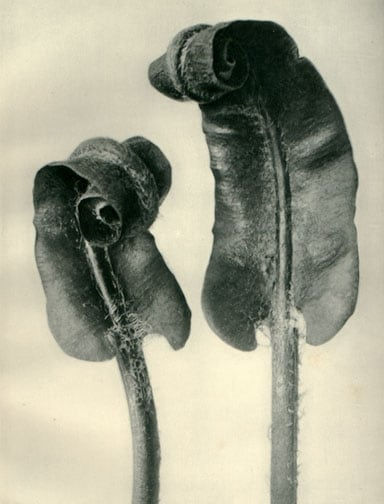
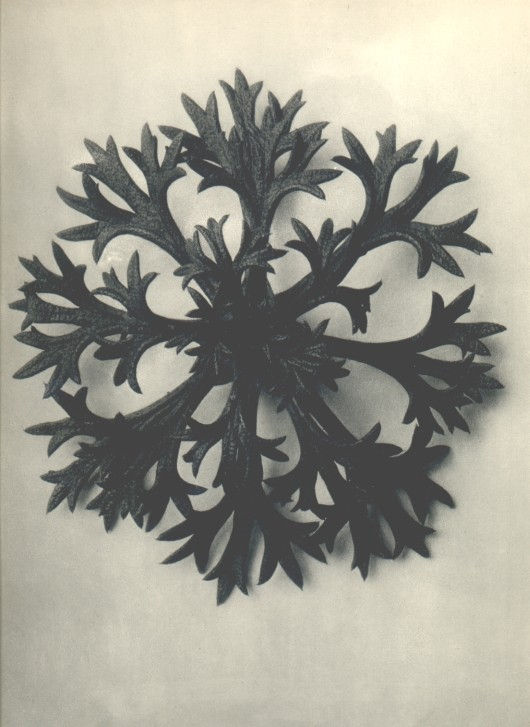
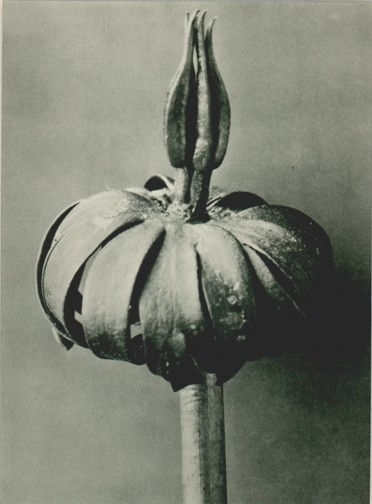
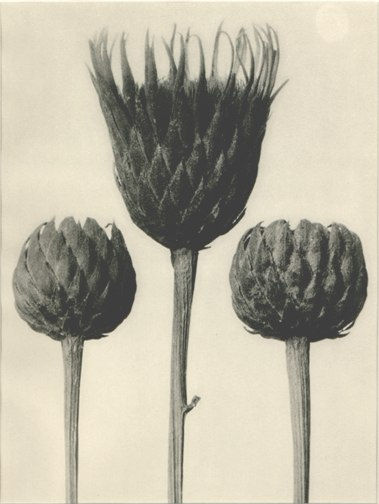
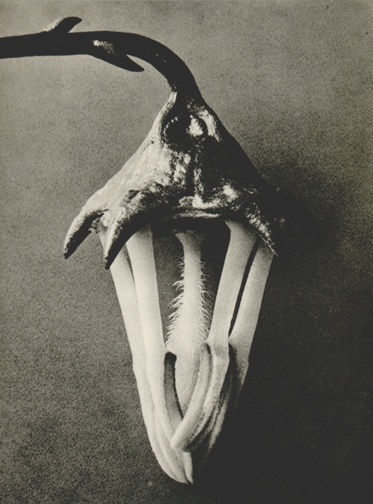
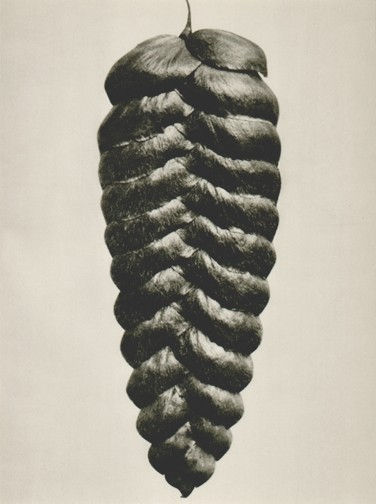
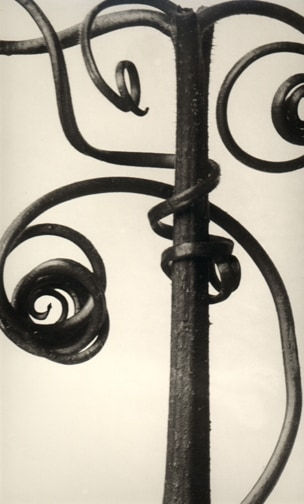
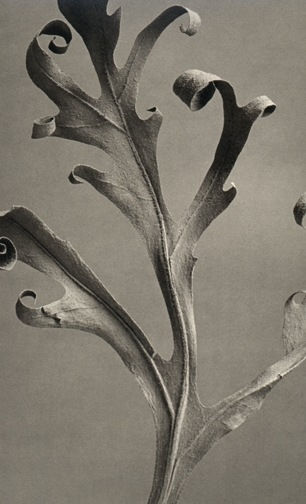
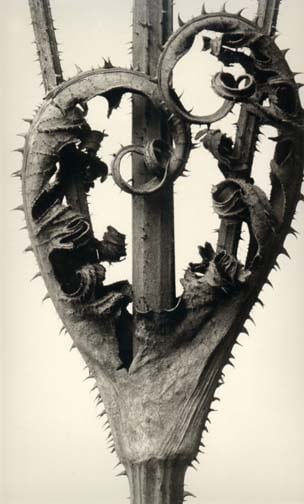
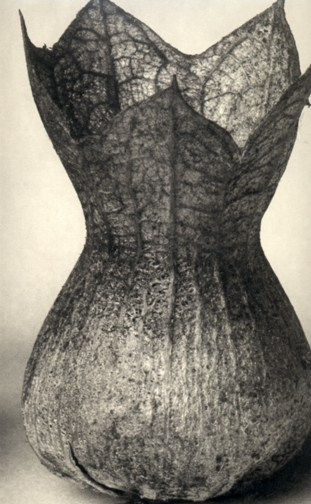
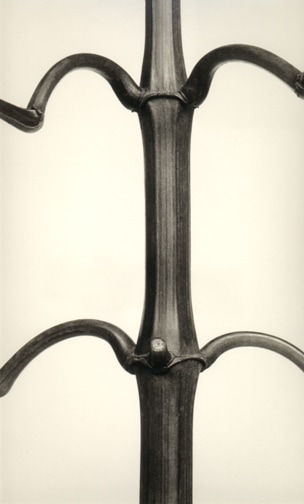
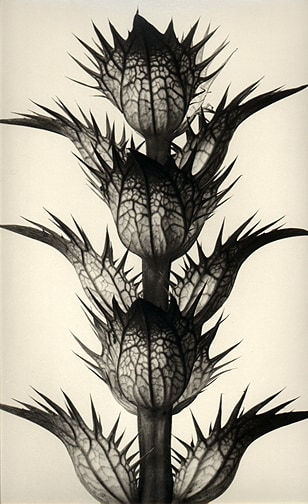
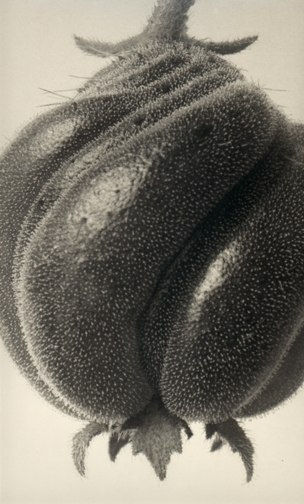
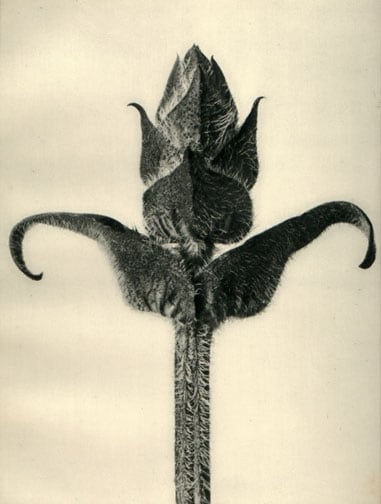
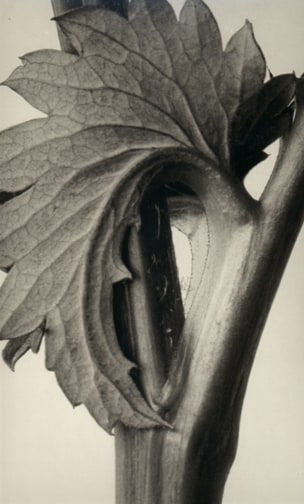
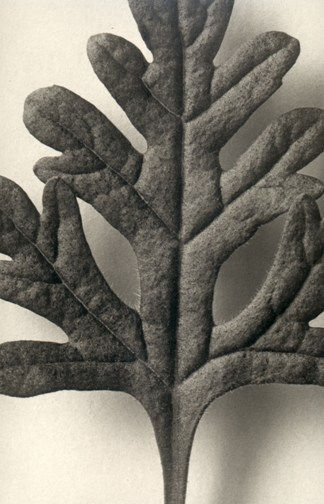

Karl Blossfeldt is best known for his precise photographs of plants; however, he began his career as a sculptor, completing apprenticeships at the ironworks and foundry in Mägdesprung and the Kunstgewerbeschule (Institute of the royal arts museum) in Berlin from 1884 to 1890. From 1890 to 1896 he traveled through Italy, Greece, and North Africa, working for Moritz Meurer, who theorized that natural forms were reproduced in art. From 1898 to 1930 Blossfeldt taught at the Kunstgewerbeschule in Berlin; during this time, he amassed an archive of thousands of photographs of plants that he used as models to teach his students.
Never formally trained in photography, Blossfeldt made many of his photographs with a camera that he altered to photograph plant surfaces with unprecedented magnification. His pictures achieved notoriety among the artistic avant-garde with the support of gallerist Karl Nierendorf, who mounted a solo show of the pictures paired with African sculptures at his gallery in 1926 and, subsequently, produced the first edition of Blossdeldt’s monograph Urformen der Kunst (Art forms in nature), in 1928. Following the enormous success of the book, Blossfeldt published a second volume of his plant pictures, titled Wundergarten der Natur (The magic garden of nature), in 1932. The clarity, precision, and apparent lack of mediation of his pictures, along with their presentation as analogues for essential forms in art and architecture, won him acclaim from the champions of New Vision photography. His work was a central feature of important exhibitions, including Fotografie der Gegenwart and Film und Foto, both in 1929.
Text courtesy of MoMA.