











"I read up on the issues relevant to where I'm shooting and I ask questions wherever I go. What I learn along the way informs what and how I photograph. Content is very important to me. I want my work to be about something, something that I care strongly about. Now I always try to have at least some working concept or idea before embarking on a project, while also being open to what I discover along the way." - Karen Halverson
When Karen Halverson was a small child in Syracuse, New York, her mother loaded her and her siblings into a car and took them on an 8,000 mile, three-month trip around the American West. She experienced the thrill of the road. And, even at that early age, she saw how dramatically different the western landscape was from what she knew. She believes that epic trip affected her deeply.
Years later, she was living in New York City and working towards a Ph.D. in anthropology. But a camera she'd acquired offered a different path. She left academia behind and took to the city streets with her camera. But still, the West beckoned. In the early 1980s, she began traveling there regularly to photograph.
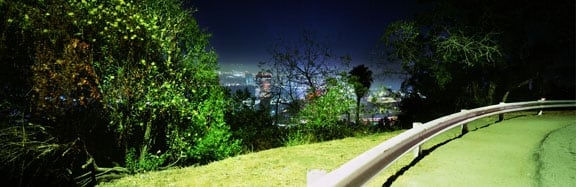
She is still awed by the vistas that the western landscape affords. Yet it is always the human presence on the land that stops her in her tracks. Although her engagement with the West continues, in recent years she has been exploring the natural and cultural landscape elsewhere, in New Orleans, Detroit, South Florida, and in the Northeast where she now lives.
"To me, all the elements in and on the landscape have equal value in terms of suggesting how we live in a particular environment. The work isn’t overtly polemical and can’t be reduced to a simple statement about man and nature—we are part of nature." - Karen Halverson
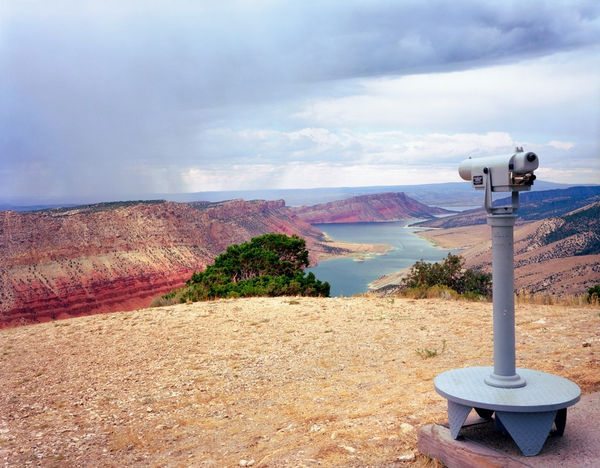
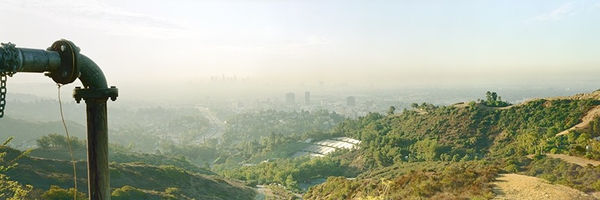
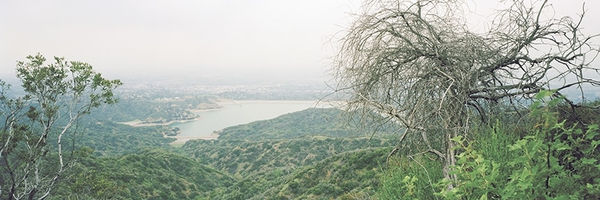
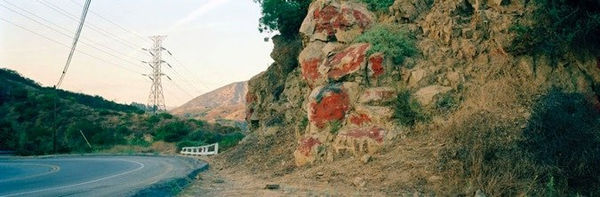
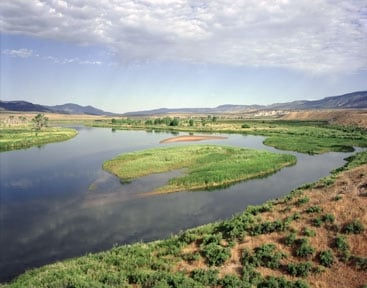
Although Karen Halverson continues to explore other regions and genres, for much of the last 25 years she has made photographs that comment on how we encounter, occupy, and alter the landscape of the American West. Although she is not overtly polemical in her work, Halverson does aim to show the multiple facets of any situation. Her series on the Colorado River system describes both the river’s natural beauty and our exploitation and consumption of its waters. Of her work, Halverson has written, “Sometimes I find beauty, sometimes desecration, often a perplexing and absurd combination.”
In 2010, the Beinecke Library at Yale University acquired Halverson’s complete oeuvre, beginning with street photographs made in New York’s Garment District inthe 1970s.
Monographs:
Mulholland: MW Editions, New York,2021
Downstream: Encounters with the Colorado River, University of California Press, 2008
Selected Collections:
Los Angeles County Museum of Art
San Francisco Museum of Modern Art
The Huntington Library and Art Galleries, San Marino, CA
J. Paul Getty Museum, Los Angeles, CA
Beinecke Rare Book and Manuscript Library, Yale University
Special Collections, Stanford University, Stanford, CA
Smithsonian American Art Museum, Washington, DC
The Corcoran Gallery of Art, Washington, DC
The Library of Congress, Washington, DC
Milwaukee Museum of Art
Museum of Fine Arts, Houston, TX
The Brooklyn Museum
The Museum of the City of New York
Santa Barbara Museum of Art
Museum of Photographic Arts, San Diego, CA
United States Embassy, La Paz, Bolivia
California State Supreme Court, San Francisco, CA
Goldman Sachs, New York
Bear Stearns, New York
Joseph Seagram & Sons, New York
Texas Instruments, Houston, TX
Texaco Corporation, Houston, TX
Federal Reserve Bank of Kansas City, Kansas City, MO
Sullivan and Cromwell, Washington, DC
Covington and Burling, Washington, DC
Robbins Kaplan Miller Ciresi, Washington, Dc
O'Melveny and Myers, Los Angeles, CA
Creative Artists Agency, Los Angeles, CA
Consolidated Natural Gas Company, Pittsburgh, PA
Microsoft, Seattle, WA